Demand for trades isn't spread evenly across the year. For plumbers, heating engineers, and the all-round hodinový manžel, it arrives in two predictable waves that land at almost the same time every year. Miss them, and you're either turning work away in the rush or sitting idle in the quiet weeks.
The good news is that both waves are forecastable, one down to the calendar and one down to the weather. If you know when they're coming and your profile is ready, you catch the surge instead of scrambling through it. This guide maps the two peaks, shows how to prepare for each, and covers a growing group of customers who spike right alongside them.
Key Takeaways
- Demand has two predictable waves: summer, around hot water outages (July and August), and autumn, when the heating season starts (from September)
- Summer district-heating outages are capped at 14 days and announced 10 days ahead (Decree 194/2007 Sb.); they make people notice their own taps, heaters, and pipes
- The heating season runs September 1 to May 31, and heating starts when the average daily temperature drops below 13°C on two consecutive days (Decree 194/2007 Sb.)
- Whoever has a complete profile, capacity, and a fast first reply wins the peak, including customers from the 1M+ foreign nationals living in Czechia (Czech Statistical Office)
Why does demand peak twice a year?
Roughly one third of Czech dwellings are connected to district heating rather than an in-flat boiler (Census 2021, Czech Statistical Office), and in Prague, Pražská teplárenská alone supplies heat and hot water to more than 250,000 households (Pražská teplárenská, ptas.cz). That single fact creates two fixed points in the calendar: summer outages, when the shared network is drained for maintenance, and the start of the heating season in autumn.
Both events push work toward private tradespeople. When the central system goes down, people finally deal with the dripping mixer they've ignored for months. When the first cold snap hits, every dodgy radiator and unserviced boiler becomes urgent at once. Neither wave is random, and that's what makes them worth planning for.
The summer wave: how outages become jobs
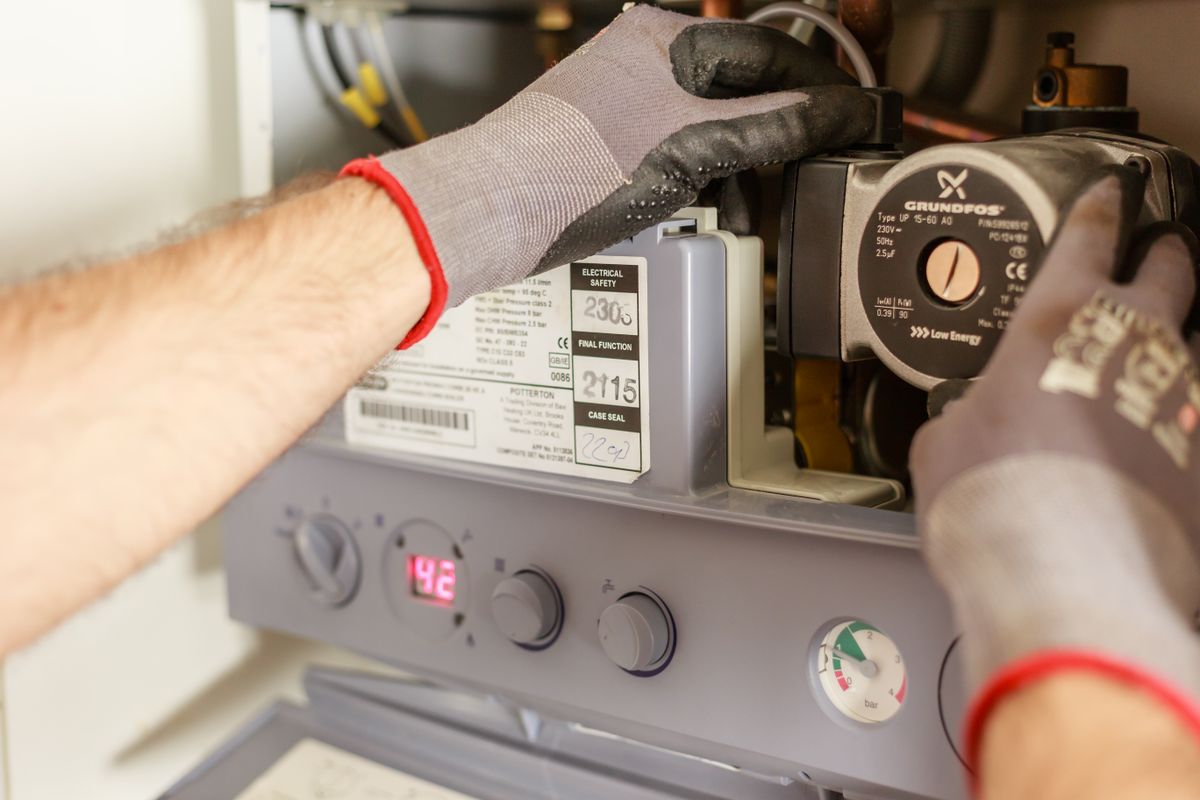
Summer hot water outages are capped at 14 days and must be announced 10 days ahead (Decree 194/2007 Sb.), and most Prague shutdowns last only three to seven days. During that window, with the central supply off, people finally notice their own water heater, taps, and pipes, and that's when private repair requests cluster.
The typical summer job list is predictable: replacing worn mixer taps, swapping a failing electric boiler, fixing seals, sorting the flexi hoses that only leak when someone actually looks. The outages themselves follow a consistent pattern, clustering in two windows, roughly early July and late August, though the exact dates change every year and vary district by district.
Each supplier publishes its own schedule, so the practical move is to check the PTAS or Veolia outage map for the districts you cover and line up availability for those specific weeks. Treat a confirmed outage window in your service area as a booked demand spike. It's one of the few times you can see the rush coming days ahead.
The winter wave: what triggers the heating season?
The heating season runs from September 1 to May 31, and supply switches on when the average daily outdoor temperature falls below 13°C on two consecutive days with no warm-up expected (Decree 194/2007 Sb.). That threshold, not a fixed date, is what sets off the autumn rush of heating work.
The first cold days bring a flood of calls: radiators that won't heat, boilers that failed their first ignition, systems nobody serviced over summer. Faults cluster hard here, in January 2026, a single breakdown left around 11,000 Prague 4 households without heat and hot water (Prague Daily News). The tradesperson who offered a pre-season boiler check in August is the one not drowning in emergencies in October.
How do you fill the calendar between the peaks?
The shoulder months, roughly March through May, are the quietest, and they're the time to build rather than wait by the phone. Since the peaks are predictable, the slow weeks are the moment to line up pre-season checks and strengthen your profile so the next wave finds you first.

A few ways to keep the quiet weeks productive:
- Offer pre-season servicing. A boiler check in late summer beats an emergency call-out in October, for you and the customer.
- Message past customers once. A short seasonal note ("getting ready for the heating season, want your boiler checked?") turns a satisfied client into a booked job.
- Widen your range. Water plus heating plus small repairs, the hodinový manžel model, smooths out the gaps between the two peaks.
- Set fair, clear rates. Our guide on how to price your work without underselling yourself helps you hold your number through the busy season.
When the rush comes, how does it find you?
In a demand spike, the customer contacts two or three tradespeople at once, and the job goes to whoever replies first with a fair price and a real profile behind them. Speed and trust decide it, not the lowest number and not the longest experience. A complete profile with photos and reviews is what lets a stranger say yes in minutes.
That means the peak rewards preparation you did months earlier: a filled-in profile, photos of finished work, and a handful of reviews. For the full playbook on visibility, reviews, and response speed, see our guide on how to get more jobs as a tradesperson. During the rush, the fast, complete profile wins the work the others can't fit in.
A customer group that spikes right alongside you
Outages and the heating season hit everyone, including the more than one million foreign nationals living in Czechia (Czech Statistical Office). Many of them rent, deal with the same broken taps and cold radiators as everyone else, and simply hit a language wall on top of it. Reaching them is easier than most tradespeople assume.
You don't need to speak or write English. On a platform like Tool Connect you build your profile in Czech and it's shown to the customer in English; they write to you in English, you receive it in Czech, and you reply in Czech. The translation runs both ways, so neither side needs the other's language.
A few things worth keeping in mind about these customers:
- Many aren't chasing the cheapest option, they want someone they can trust, communicate with, and rely on.
- Because many don't know local price norms, a fair price stated clearly up front, including any travel or call-out fee, wins more trust than the lowest quote.
- They often share recommendations within expat communities, so one satisfied customer can bring several more.
For the full picture on this audience, see our article on expat customers and why trust matters more than language.
Be ready for both waves on Tool Connect
The two demand waves come every year whether you're ready or not. A complete profile on Tool Connect means the summer hot water rush and the winter heating rush both find you, including English-speaking customers you'd otherwise never reach.
Build your profile in Czech, it's translated automatically for customers, and messages are translated both ways, so you never need English. Add photos of your finished work, your service area, and your trade licences, because the completed profile is usually the first and often the only thing a customer judges before choosing who to contact.
Set up your profile at tool-connect.com.
FAQ
When is demand for plumbers and heating techs highest?
Two peaks. Summer (July and August) brings hot water work around district-heating outages, which last three to seven days and up to 14 by law (Decree 194/2007 Sb.). Autumn brings heating jobs once the season starts on September 1. The March-to-May shoulder is quietest.
How long do summer hot water outages last?
Usually three to seven days, with a legal maximum of 14 days for planned maintenance, announced at least 10 days ahead (Decree 194/2007 Sb.). Dates vary by district and street, so a single service area can have demand spikes spread across several separate weeks in July and August.
When does the heating season officially start?
The heating season runs September 1 to May 31, and heating switches on when the average daily temperature drops below 13°C on two consecutive days (Decree 194/2007 Sb.). Because it's weather-triggered, the exact start shifts each year, which is why pre-season servicing pays off.
Do I need to speak English to serve expat customers?
No. On Tool Connect you write in Czech, the customer reads it in English, and their messages reach you in Czech; the translation runs both ways. With over one million foreign nationals in Czechia (Czech Statistical Office), that's a sizeable group reachable without any English at all.
What should I do in the quiet shoulder months?
Prepare, don't wait. Offer pre-season boiler and heating checks, message past customers once, and complete your profile and reviews so the next wave finds you first. The slow weeks between the peaks are when the groundwork for the busy season actually gets done.
Sources and Data
| Data point | Value | Source |
|---|---|---|
| Czech dwellings on district heating | Roughly one third | Census 2021, Czech Statistical Office |
| Households supplied by Pražská teplárenská in Prague | More than 250,000 | Pražská teplárenská (ptas.cz) |
| Maximum planned outage length | 14 days | Decree 194/2007 Sb. |
| Minimum advance notice | 10 days | Decree 194/2007 Sb. |
| Typical Prague outage length | 3 to 7 days | expats.cz, 2026 |
| Heating season | September 1 to May 31 | Decree 194/2007 Sb. |
| Heating start trigger | Below 13°C average, 2 consecutive days | Decree 194/2007 Sb. |
| Prague 4 households hit by Jan 2026 fault | Around 11,000 | Prague Daily News, January 2026 |
| Foreign nationals living in Czechia | Over 1 million | Czech Statistical Office |