The phone rings a lot more in September than it does in July, but a heating technician still has only one calendar. Wait for the first real cold snap, and you're dealing with a queue of customers who all want an appointment right now, ideally yesterday. Customers who don't book in time look for another tradesperson instead, usually whoever had an open slot first.
Under Decree 194/2007 Sb., the heating season officially starts on September 1st, and heating kicks in once the average daily temperature drops below 13°C for two consecutive days. Until then, there's time that can be used for something better than waiting by the phone. This article shows how heating technicians and plumbers can fill their calendar in summer by pre-selling service, backed by clear legal grounding and without scaring customers unnecessarily.
Key Takeaways
- Heating season starts on September 1st, and heating kicks in once temperatures drop below 13°C for two consecutive days (Decree 194/2007 Sb.), but demand for service jumps sharply with the first cold snap rather than rising gradually
- A flue inspection is mandatory once a year for gas boilers, once every 2 years for condensing boilers, and up to three times a year for solid-fuel boilers (Decree 34/2016 Sb.)
- Running a non-compliant solid-fuel boiler can carry a fine of up to CZK 50,000 (Ministry of the Environment of the Czech Republic)
- The trade has a long-running capacity shortage, with roughly 100,000 tradespeople missing in Czechia (AMSP ČR, 2025), so whoever fills their calendar early has a real advantage
- A pre-season offer with a clear deadline works more reliably than a generic "book early" reminder
Why waiting for the first frost is a mistake
Demand for boiler service and inspections doesn't rise steadily through autumn. Industry sources describe it as a sudden jump: the moment temperatures first drop noticeably, people suddenly realize their boiler isn't heating the way it should, or that their last inspection was two winters ago. Whoever waits for that moment with an empty calendar ends up managing a rush, not planned work.
Customers put off service for the same reason they put off most maintenance: as long as the boiler is heating, there's no reason to deal with it. For heating technicians, though, that means demand gets compressed into a few autumn weeks, where planned service collides with emergency call-outs and the calendar fills up chaotically instead of evenly. A customer who calls in mid-September with a broken boiler waits longer, often pays more for an emergency visit, and the technician loses time that could have gone to work booked well in advance.
This autumn wave is only one of two predictable seasonal peaks in the trade, alongside the summer hot water shutdowns tracked in the annual seasonal demand calendar. And the market doesn't have much slack to absorb a rush. Czechia has a long-running shortage of roughly 100,000 tradespeople, and the average wage for plumbers and heating technicians runs around CZK 39,500 a month, up 6.4% year on year (AMSP ČR, via Euro.cz, 2025). Anyone entering autumn with an empty calendar is betting they can handle demand at exactly the moment the trade's capacity is most stretched.
Smoothing out that peak doesn't start in September. It starts a few months earlier, while the technician still has open capacity and the customer isn't dealing with anything urgent yet.
What's legally required, and what's just recommended
An annual service inspection of a gas boiler isn't legally required for households, unlike for businesses, where a boiler check every 3 years is mandatory under Government Regulation 191/2022 Sb. For households, though, manufacturers very often require it as a condition of the warranty, and more importantly, the flue inspection is legally required (Decree 34/2016 Sb.).
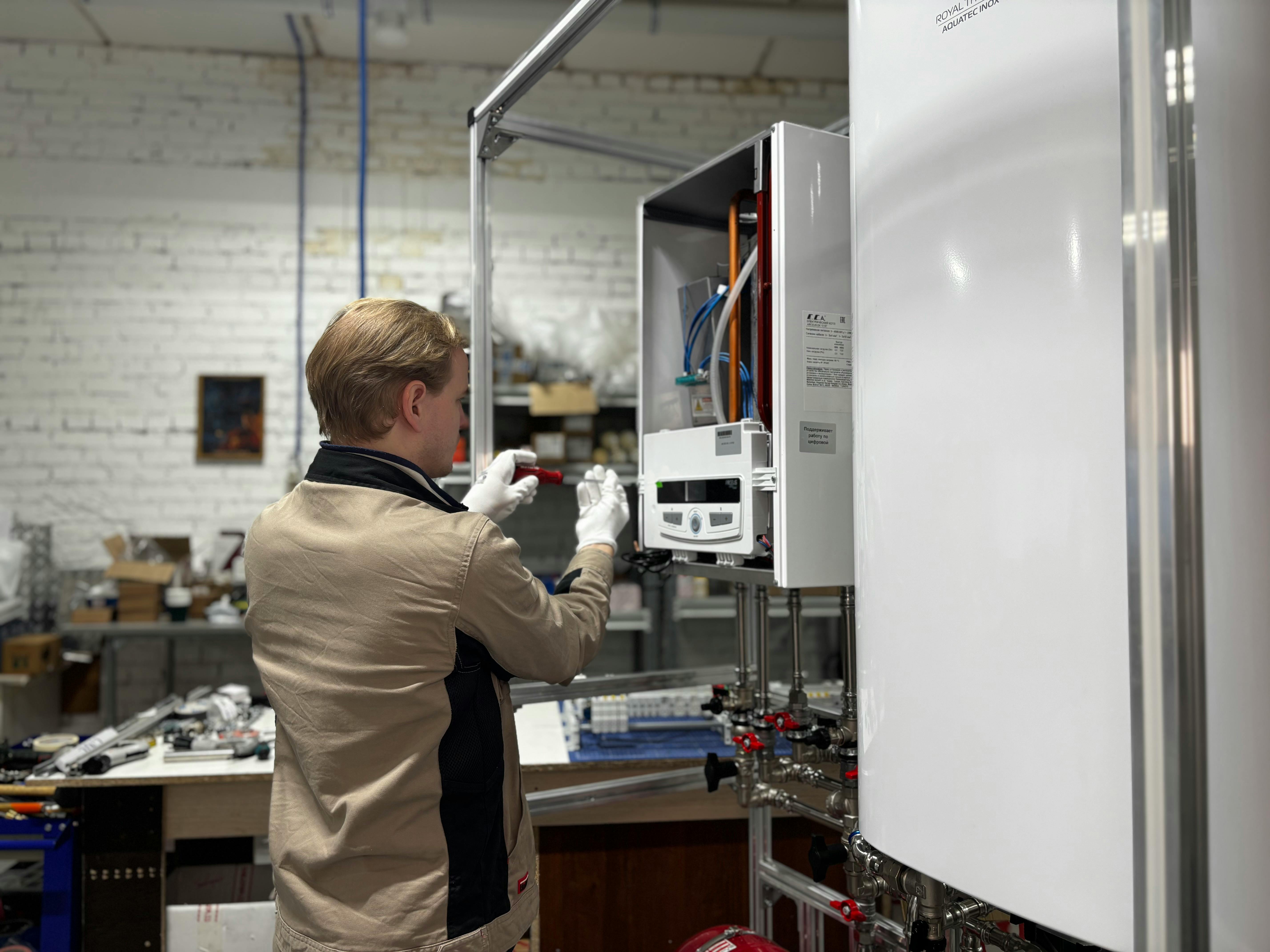
An inspection and a service visit aren't the same thing, and it's worth being able to explain that difference to a customer. The flue inspection checks whether the flue and chimney are safely venting combustion gases, and its frequency is set by decree, not by customer preference. For gas boilers that's once a year, for condensing gas boilers once every 2 years, and for solid-fuel boilers up to three times a year (Decree 34/2016 Sb.). A service visit, on the other hand, means checking and adjusting the boiler itself. Manufacturers usually recommend it once a year, and for some models it's a warranty condition.
This is exactly the kind of argument that works without scare tactics. The point isn't to frighten the customer with a fine, it's to remind them of a concrete, verifiable legal deadline and offer them an appointment before they forget about it themselves. It also helps to have a ready-made template for how to write a price quote, which you can send the customer along with the inspection date, not a week later.
The risk customers underestimate: insurance and fines
A missing inspection can mean more than just an inconvenience. For solid-fuel boilers, running a unit that doesn't meet emissions requirements can carry a fine of up to CZK 50,000 (Ministry of the Environment of the Czech Republic). And according to industry experience, insurance can be an issue too: in the event of a fire or carbon monoxide leak, an insurer may reduce or refuse a payout if the customer can't produce a valid inspection certificate. Exact terms vary from insurer to insurer, but proof of inspection tends to be among the first things an insurer asks for during a claim.
This is information that just needs to be stated matter-of-factly, not as a threat. Most people simply don't know that inspections affect insurance payouts, not just operating safety. A short line in the offer, something like "a valid inspection is also documentation your insurer will ask for after any damage," works better than anything that sounds like pressure or scare tactics.
For medium and larger solid-fuel boilers, with an output of 10 to 300 kW, a mandatory technical condition check also applies once every 2 years (Ministry of the Environment of the Czech Republic). That deadline is also a concrete date, one you can simply remind the customer about before it expires, instead of letting them discover it on their own, usually once it's already too late.
What a good pre-season offer looks like
A clear deadline works, something like "book your service by the end of August," paired with a concrete benefit: an earlier appointment, a small discount, or an extended warranty on the work. A generic call like "book early" doesn't push the customer toward anything, because it doesn't give them a specific date to decide by.
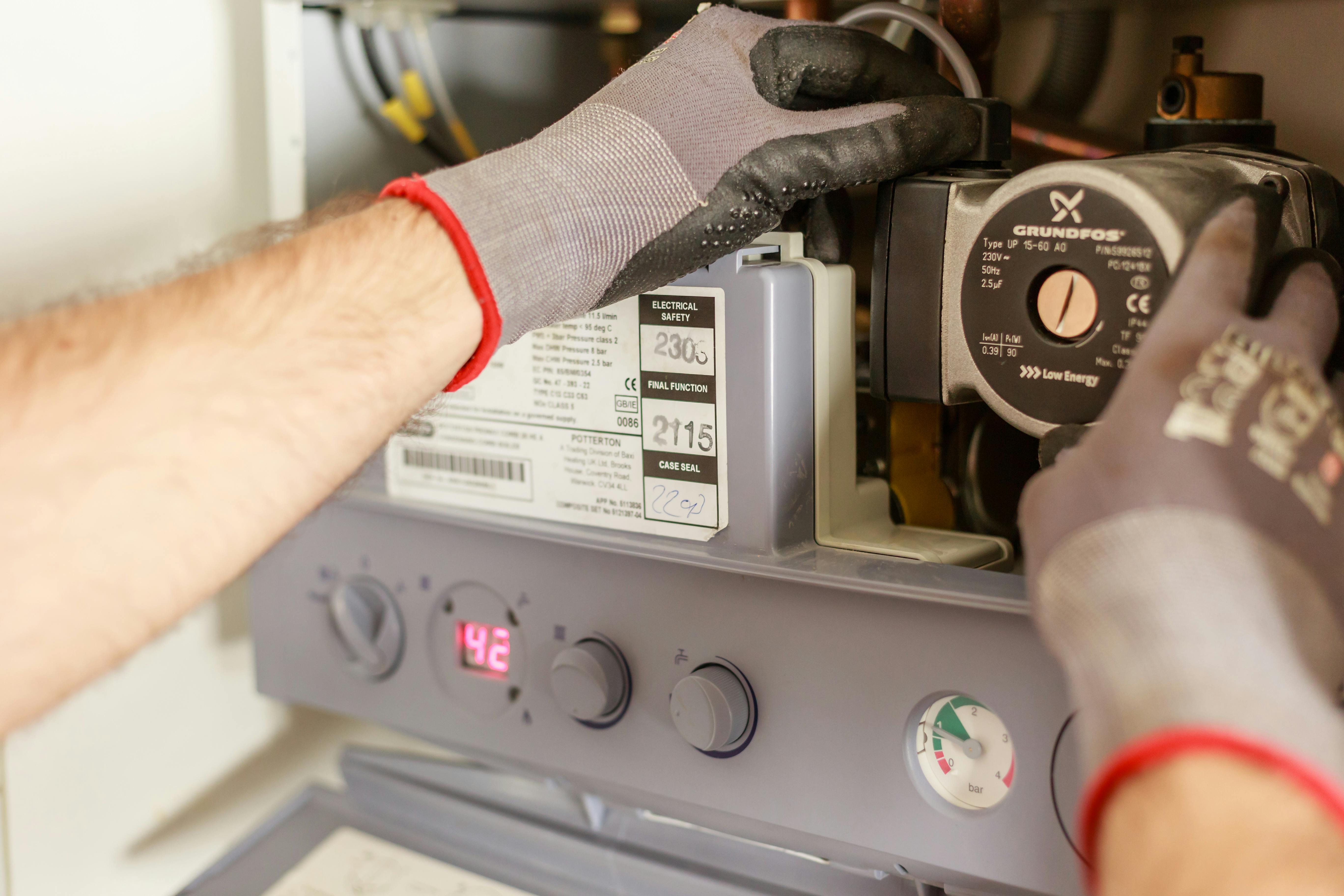
For existing customers, a short reminder is enough, ideally referencing the exact date of last year's service, something like "we did your inspection last September, this year we have openings as early as August." You can't reach new customers this way directly; for them, what matters more is a complete profile and reviews, which a later section of this article covers.
Companies that run an ongoing service program, meaning they regularly reach out to customers with the next service offer instead of waiting for customers to initiate, tend to see a significantly smaller seasonal revenue dip than companies that rely solely on inflow demand, according to international industry sources (GlassHousePro, industry experience from the US market, 2026). The principle carries across markets: regular contact smooths out the swings, waiting for the phone to ring leaves them exactly as they are.
How to keep your calendar full outside the peak
Summer and early autumn are the time for actively reaching out to customers, not for waiting by the phone. Anyone who just sits in July and August waiting for the phone to ring is leaving jobs on the table that they could otherwise have booked well ahead and without competitive pressure.
The simplest step is going through last season's customers and sending them a short reminder with a specific date. The second step is offering a combined service, the boiler along with a radiator check, bleeding the system, or replacing seals, because a customer who books one thing is more likely to agree to a second if you propose it right there in the same offer.
Expanding the scope of work only makes sense, though, when your pricing is set up so that a combined job is actually worth it, not just filling time in the calendar. Our pricing guide for tradespeople helps you work out when expanding the scope genuinely pays off and when it's just extra work for the same money.
How customers looking for service right now find you
When a customer is actively searching for pre-season service, the winner is whoever they find first and trust without much deliberation. What decides it is a complete profile, visible reviews, and a fast response, not necessarily the lowest price.
A profile focused on boiler service should clearly state which types of boilers you service, whether you also handle flue inspections or arrange them through a chimney sweep, and how quickly you can realistically take new appointments. Reviews from previous customers work as a shortcut to trust: a customer who doesn't know you decides mainly based on what others have said.
Response speed is, according to industry experience, one of the strongest factors in deciding who gets the job, which our guide on how to get more jobs covers in more detail. That's especially true during the pre-season wave, when a customer often contacts several tradespeople at once and picks whoever responds first, clearly, and with a specific date.
Build your profile before the autumn peak hits
A complete profile on Tool Connect helps customers find you before they contact five other heating technicians at once, including customers searching in English, without you needing to speak English yourself. It's worth having your profile ready in summer, not once demand suddenly spikes.
Your service description, reviews, and fast responses work together, not in isolation, and the sooner you have them in place, the sooner pre-season service demand finds you. Start at tool-connect.com.
FAQ
Is annual gas boiler service legally required for households?
No, not for households. Manufacturers, though, often require it as a warranty condition, and it's part of responsible boiler maintenance. What's legally required, on the other hand, is the flue inspection (Decree 34/2016 Sb.).
How often is a flue inspection required?
Once a year for gas boilers, once every 2 years for condensing gas boilers, and up to three times a year for solid-fuel boilers (Decree 34/2016 Sb.). The frequency is set by decree, not by a customer's or technician's guess.
When's the best time to offer customers pre-season service?
In summer, while the technician still has open capacity and the customer isn't yet dealing with the rush of the first cold snap. An offer with a clear deadline, like "book by the end of August," works better than a generic call to book early.
Can a customer be fined for a missing inspection?
For solid-fuel boilers, yes, up to CZK 50,000 for running a boiler that doesn't meet emissions requirements (Ministry of the Environment of the Czech Republic). For boilers with an output of 10 to 300 kW, a mandatory technical condition check also applies once every 2 years.
How do you keep your calendar evenly booked outside the seasonal peak?
Regular reminders to existing customers and a clearly worded pre-season offer work better than waiting for new demand to appear. Companies with an established service program tend, according to industry sources, to see a smaller seasonal revenue dip.
Sources and Data
| Data point | Value | Source |
|---|---|---|
| Start of the heating season | Sept 1, heating starts once temperatures drop below 13°C for two consecutive days | Decree 194/2007 Sb. |
| Flue inspection, gas boilers | 1x a year (condensing boilers, once every 2 years) | Decree 34/2016 Sb. |
| Flue inspection, solid fuel | Up to 3x a year | Decree 34/2016 Sb. |
| Technical condition check for solid-fuel boilers, 10 to 300 kW | Once every 2 years | Ministry of the Environment of the Czech Republic |
| Fine for running a non-compliant solid-fuel boiler | Up to CZK 50,000 | Ministry of the Environment of the Czech Republic |
| Business boiler inspection | Once every 3 years | Government Regulation 191/2022 Sb. |
| Tradesperson shortage in Czechia | Roughly 100,000 | AMSP ČR, via Euro.cz, 2025 |
| Average wage for plumbers and heating technicians | Approx. CZK 39,500, up 6.4% year on year | AMSP ČR, via Euro.cz, 2025 |
| Seasonal revenue dip for companies with an ongoing service program | Significantly lower than companies without a program, per industry sources | GlassHousePro, industry experience (US market), 2026 |