The radiators are still cold, but the calendar doesn't care. Heating season in the Czech Republic has a legal start date, and there's a short window before it where getting things sorted saves you money, or at least saves you a cold week arguing about whose problem it is.
Most renters, especially newcomers who haven't dealt with a Czech lease before, don't know the rules here. They don't know who to call when a radiator stays cold, and many assume everything heating-related lands on their own bill by default. It usually doesn't. This guide walks through what to check before October and, item by item, who actually pays: you or your landlord.
Key Takeaways
- The Czech heating season runs September 1 to May 31, and heat switches on once the average daily temperature stays below 13°C for two consecutive days (Decree 194/2007 Sb.)
- Boiler servicing is routine tenant-paid maintenance, separate from the landlord's one-time safety revision at move-in
- Chimney and flue sweeps are required once a year for gas appliances (every two years for condensing gas boilers) and up to three times a year for solid fuel (Decree 34/2016 Sb.)
- Radiators themselves and the shared heating pipes are the landlord's responsibility, not a tenant repair, under Nařízení vlády 308/2015 Sb.
- A cold radiator often just needs bleeding, a five-minute fix that doesn't require calling anyone
When does heating season actually start?
The heating season runs from September 1 to May 31 by law, and heat is switched on once the average daily temperature drops below 13°C for two consecutive days (Decree 194/2007 Sb.). This isn't a guess your building manager makes each autumn. It's a defined trigger, so you can roughly predict the switch-on date by watching the forecast.
If your flat is on district heating, that trigger applies automatically. Roughly one third of Czech dwellings run on centralized district heating rather than an individual boiler, and the share is higher in Prague (Census 2021, Czech Statistical Office). In those buildings, the supplier turns the system on for the whole block once the temperature rule is met, and no single tenant can speed that up or slow it down. If you'd rather understand the shared-network side of Czech heating in more depth, including how planned summer maintenance works, see our piece on district heating and hot water outages.
Flats with their own gas boiler work differently. If you control your own heating, you can switch it on earlier than September 1 if the flat feels cold, you don't have to wait for the official date. The law sets the outer boundary for shared systems, not a ban on private ones running early.
Boiler service: is it required, and who pays?
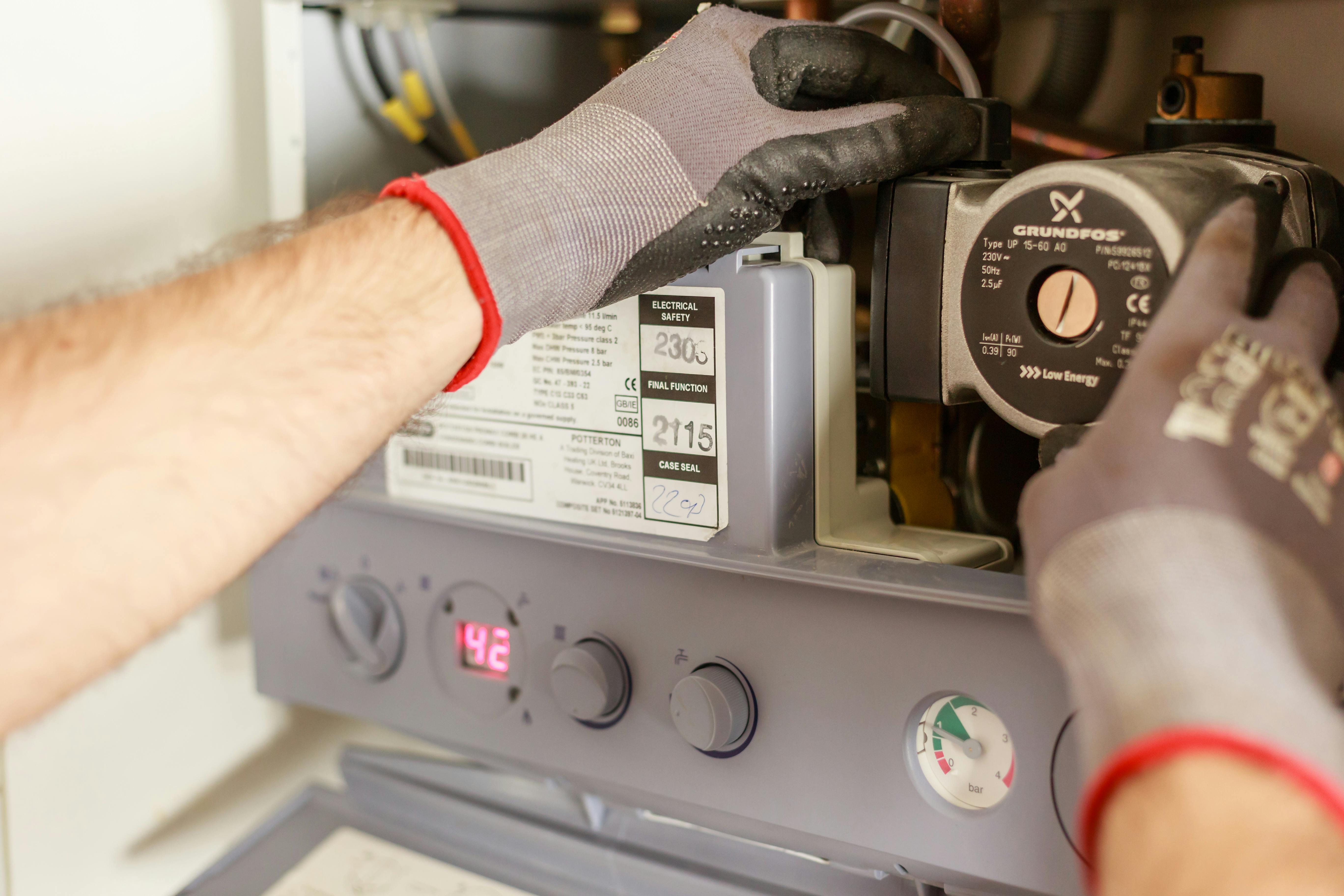
A routine annual boiler service isn't a blanket legal requirement for households the way it is for businesses, which must have equipment inspected every three years under Nařízení vlády 191/2022 Sb. For a private tenant, though, most manufacturers make an annual service a condition of the warranty, and under the Civil Code it counts as ordinary maintenance, which is the tenant's cost, not the landlord's.
That split confuses a lot of renters, so it's worth naming the two terms directly. A revize is a safety and gas-leak inspection, a one-time check the landlord is responsible for arranging before you move in and periodically after. A servisní prohlídka is the annual servicing visit, cleaning, checking pressure, confirming the burner is running efficiently, and that ongoing cost sits with the tenant as part of everyday upkeep. For the fuller breakdown of which repairs fall to a landlord versus which are yours to cover, our full landlord vs. tenant repair breakdown walks through the general rules beyond heating specifically.
Skipping the annual service risks more than a cold October. It can void a manufacturer's warranty, and industry sources note that insurers may reduce or deny a payout after a fire or carbon monoxide incident if there's no record of recent servicing. None of that requires a specific figure to take seriously: a missing service record is simply a weak position to be in if something goes wrong.
Chimney and flue sweeps: the rule most renters miss
Chimney and flue sweeping has a specific legal frequency, and it applies even to a gas-heated flat, not just a fireplace. Under Decree 34/2016 Sb., gas-appliance flues need sweeping and inspection once a year, or once every two years for condensing gas boilers, while solid-fuel flues used continuously need sweeping up to three times a year. Only a licensed kominík (chimney sweep) can certify the work.
This is the item most renters skip entirely, because "chimney sweep" sounds like something only for houses with fireplaces. If your gas boiler vents through a flue, and most do, that flue still needs a certified check on the same rough timeline as the boiler service, and providers often bundle the two visits together for convenience. Keep the certificate. Insurers can reduce or refuse a claim after a fire or carbon monoxide incident without proof the sweep happened on schedule, even if the fire itself had nothing to do with the chimney.
Radiators and heating pipes: usually not your bill
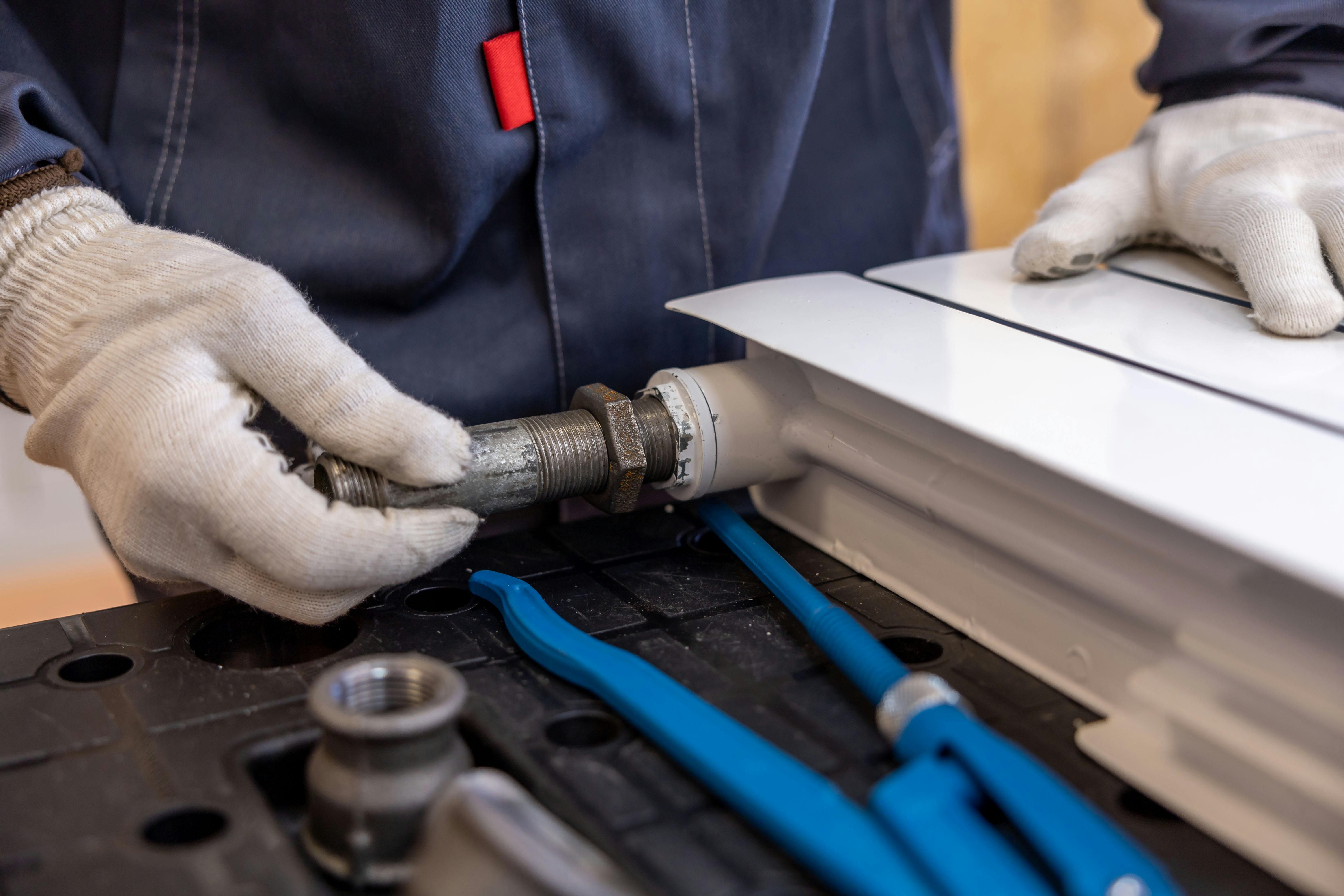
The radiators themselves and the shared heating pipes belong to the landlord's list of responsibilities, not a tenant minor repair, under Nařízení vlády 308/2015 Sb. If a radiator is leaking, cracked, or simply won't heat no matter what you try, that's a landlord repair, not something you should be paying a technician for out of pocket.
The nuance is in what counts as a tenant's "small repair" versus what doesn't. Replacing a thermostatic valve or doing minor cleaning falls within the tenant's small-repair category, currently capped at 1,500 CZK per item and 150 CZK per square meter of the flat per year in total (Nařízení vlády 308/2015 Sb., as of January 2026). A leaking radiator body or a broken section of distribution pipe sits above and outside that category entirely, it's the landlord's repair regardless of cost. If you're not sure who a specific job belongs to and do need someone to carry out a repair that is yours to cover, it's worth knowing how to find a heating technician in Prague you can trust with the job.
So before paying anyone for a "broken radiator," check which part is actually broken. A stuck valve is likely yours. A cracked radiator body or a leaking pipe joint is your landlord's.
How to bleed a radiator yourself (before calling anyone)
A radiator that's cold at the top but warm at the bottom almost always just needs bleeding, and that's a five-minute job, not a service call. Trapped air rises to the top of the radiator and blocks hot water from filling the whole unit, so releasing that air fixes the problem immediately.
Here's the process. Get a radiator bleed key (or a flathead screwdriver, depending on the valve type) and a small towel. With the heating on and the radiator warm, find the bleed valve, usually a small square or slotted fitting at one end near the top, and turn it slowly counterclockwise. You'll hear a hiss as air escapes; keep the towel underneath. Once the hiss stops and a steady trickle of water comes out, close the valve again. Check the boiler pressure gauge afterward, since bleeding a radiator can drop it slightly, and top it up if the manual says to.
That fix is enough for one cold radiator. If the whole flat stays cold, or the boiler's pressure keeps dropping no matter how often you top it up, that's a different problem, and it's worth understanding what counts as a real heating emergency before deciding whether it can wait until morning or needs someone out immediately.
Your pre-October checklist
Pull everything above into one list and work through it before the first cold snap. This is the short version, everything else in this guide explains the reasoning behind each line.
- Book your boiler service. Confirm it's scheduled before October, not during the first cold week when everyone else is calling too.
- Confirm the chimney or flue sweep. Ask the technician for the certificate, and keep it somewhere you can find it.
- Bleed every radiator once. Even ones that seem fine can have a small air pocket that shows up once you actually need full heat.
- Check the boiler pressure gauge. Most manuals list the correct range; top it up if it's low.
- Test your thermostat and valves. Confirm each radiator actually responds when you turn its valve.
- Report anything structural to your landlord now. A cracked radiator or a pipe that's been weeping slowly is their repair, and giving notice early avoids a dispute once it's genuinely cold.
Booking service before the rush
Demand for heating technicians spikes hard the moment temperatures drop, so booking in August or early September gets you a slot while a call placed during the first cold snap can mean a wait of days or longer. Summer and early autumn are the quiet season for most technicians, which is exactly why it's the easiest time to get someone out.
There's no need to guess at exact booking volumes to make the case here. The pattern is straightforward: everyone who put off their boiler service eventually calls at once, right when the weather turns, and technicians can only be in one place at a time. Getting ahead of that queue is simply a matter of timing, not luck.
Finding someone reliable is the other half of the problem, especially if you don't speak Czech and most heating technicians in Prague work in Czech first. That's exactly what Tool Connect was built for: describe the job in English, and the provider reads and replies in Czech, translated automatically in both directions. Neither side needs to know the other's language, and you can browse provider profiles and reviews before you commit to a booking.
Start at tool-connect.com.
FAQ
When does the heating season start in the Czech Republic?
It runs from September 1 through May 31, and heat switches on once the average daily temperature drops below 13°C for two consecutive days (Decree 194/2007 Sb.). Buildings on district heating follow this automatically, while flats with their own boiler can start earlier if the tenant chooses.
Do I have to pay for my own boiler service?
Usually, yes. An annual service counts as ordinary maintenance under the Civil Code, which is a tenant cost. The landlord's responsibility is the one-time safety revision (revize) at move-in, not the recurring service visits after that.
Who pays if my radiator itself is broken?
The landlord. Radiators and the shared heating pipes aren't part of the tenant's small-repair category under Nařízení vlády 308/2015 Sb. What you might cover instead is a small item like a thermostatic valve, which does fall within the tenant's small-repair cap.
How often does my chimney or flue need sweeping?
Once a year for gas appliances, or once every two years for condensing gas boilers, and up to three times a year for solid fuel used continuously (Decree 34/2016 Sb.). Only a licensed kominík can certify the work, so ask for the certificate and keep it.
What if my radiator is cold at the top but warm at the bottom?
Bleed it. That's almost always trapped air, not a broken part, and it's a five-minute fix with a bleed key or a flathead screwdriver. If bleeding doesn't help, or the whole flat is cold, that points to a bigger issue worth reporting.
Sources and Data
| Data point | Value | Source |
|---|---|---|
| Heating season dates | September 1 to May 31 | Decree 194/2007 Sb. |
| Heating switch-on trigger | Below 13°C average, 2 consecutive days | Decree 194/2007 Sb. |
| Czech dwellings on district heating | Roughly one third, higher share in Prague | Census 2021, Czech Statistical Office |
| Business boiler inspection frequency (contrast point) | Every 3 years | Nařízení vlády 191/2022 Sb. |
| Gas appliance flue sweep and inspection | 1x per year (1x per 2 years for condensing gas boilers) | Vyhláška 34/2016 Sb. |
| Solid-fuel flue sweep, continuous use | Up to 3x per year | Vyhláška 34/2016 Sb. |
| Tenant small-repair cap | 1,500 CZK per item, 150 CZK/m²/year total (as of Jan 2026) | Nařízení vlády 308/2015 Sb. |